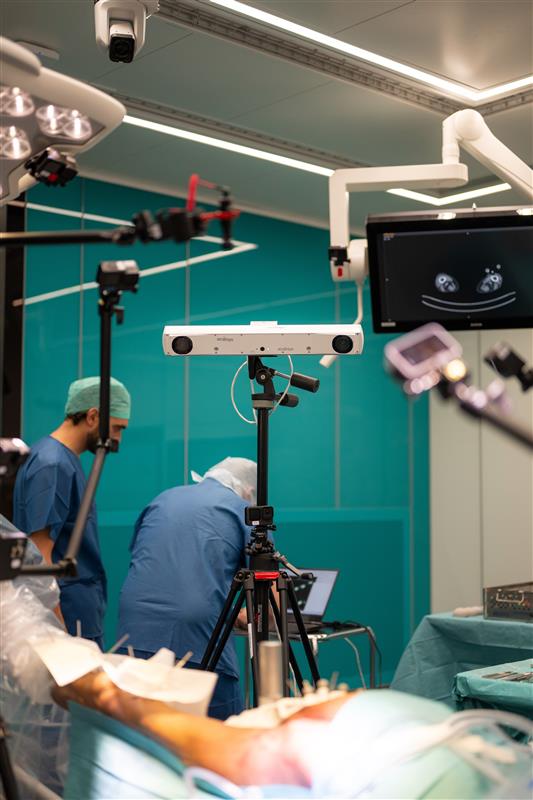
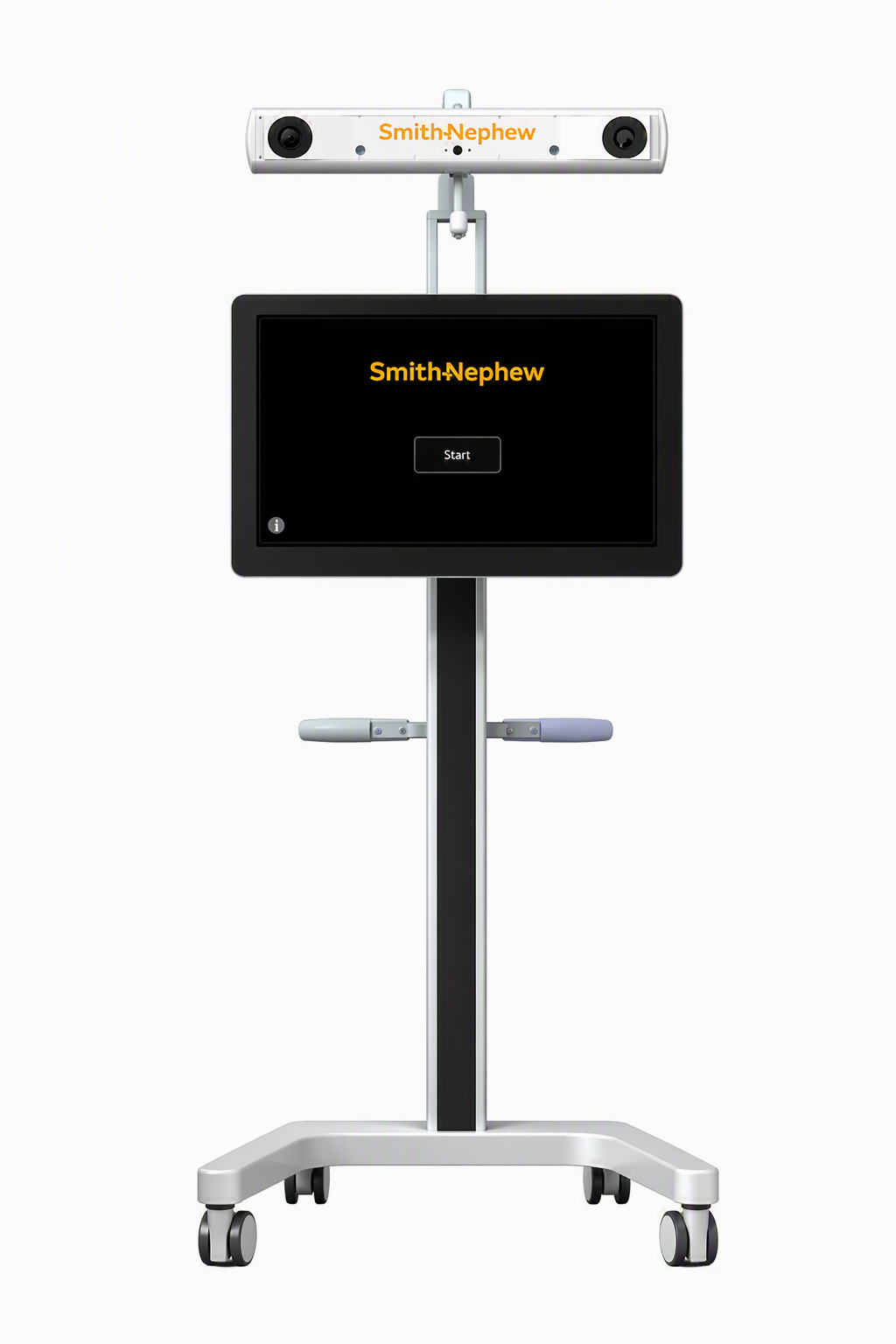
Atracsys has published a new case study highlighting the integration of the fusionTrack™ 500 optical tracking camera into the Smith+Nephew CORI XT handheld robotics platform for joint arthroplasty. The case study explores the role of optical tracking in enabling the precision, responsiveness, and workflow efficiency required by modern surgical robotics.
Unlike conventional surgical navigation systems, handheld robotic platforms rely on tracking data not only for visualization, but also for real-time instrument control. This places demanding requirements on tracking performance, including low latency, high accuracy, and measurement consistency. The case study examines how the fusionTrack™ 500 was selected to support these requirements within a compact and mobile robotic platform.
The publication also highlights the importance of manufacturing scalability, product quality, and long-term platform support when deploying robotics systems worldwide. Since its launch, the CORI platform has grown to more than 1,100 installed systems and expanded beyond knee procedures to include hip navigation and shoulder applications.
Read the full case study to learn how optical tracking supports real-time instrument control in handheld surgical robotics.
“An essential component of the CORI system is its robotic handpiece, which shapes bone using a high-speed cutting burr. As the bone-cutting function is continuously updated, precise real-time tracking and control are critical to successful performance. By increasing tracking accuracy and acquisition rate while reducing latency, the Atracsys fusionTrack™ 500 optical tracking camera plays a key role in enabling this capability and significantly improves the system performance over the previous generation.”
— Branislav Jaramaz, Ph.D., VP of Research, Technology and Innovation, Smith+Nephew